Bandcamp
Discover, connect with, and directly support the artists you love.
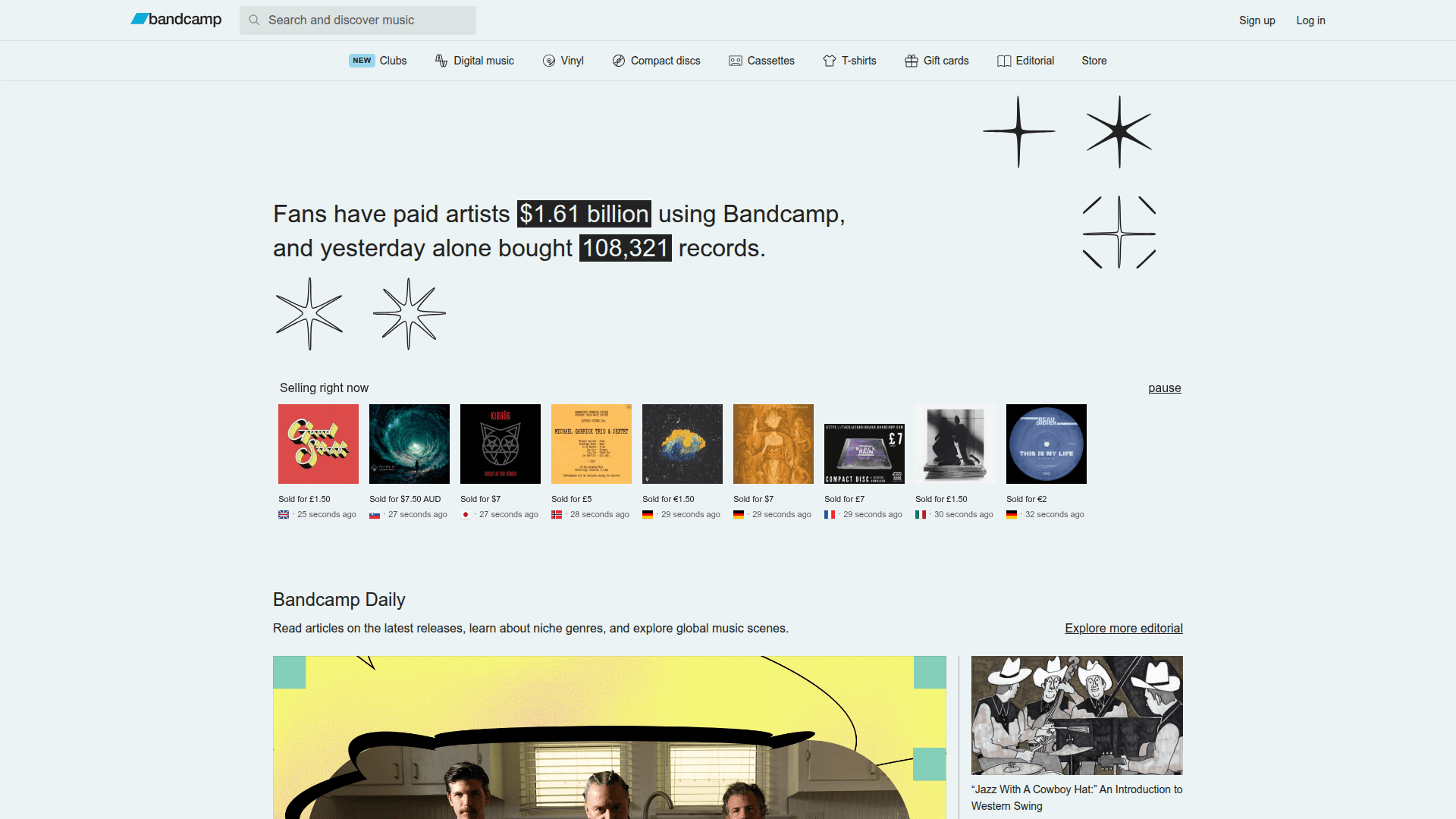
Bandcamp is a music platform empowering artists through direct fan support, offering a marketplace for digital and physical music, and fostering a vibrant community.
What Bandcamp is (in plain English)
Bandcamp is a direct‑to‑fan record store and music community where people buy digital downloads, vinyl, CDs, tapes, and merch straight from artists and labels. You set the price, fans choose to pay more if they want, and most of the money goes to you. It’s artist‑first by design. (bandcamp.com)
The platform takes a transparent revenue share—typically 15% on digital (dropping to 10% after $5,000 in sales) and 10% on physical—with the rest paid out to artists and labels, usually daily. Fans have paid over $1.6B to artists on Bandcamp. (get.bandcamp.help)
Why this matters to a solid Back Office
Predictable payouts, clear reporting. Daily or near‑daily payouts and built‑in reports (revenue summaries, payout statements, raw data) make cash flow and reconciliation straightforward. There’s also a Sales Report API for automated ingestion. (get.bandcamp.help)
Tax compliance is handled. Bandcamp calculates, collects, and remits applicable taxes (US state sales tax, VAT, GST, etc.) in covered regions and provides the IDs you need for cross‑border shipping (IOSS, UK VAT, and more). US sellers over the threshold receive a 1099‑K. That reduces manual tax admin and audit risk. (get.bandcamp.help)
Inventory, SKUs, and shipping workflows. You can manage merch quantities, options (sizes/colors), SKUs, and order statuses; inventory decrements automatically on sale. There’s also a beta sync with Shopify to keep quantities aligned. (get.bandcamp.help)
Chart reporting built in. Enter ISRC/UPC/EAN and Bandcamp reports eligible sales to major charts (SoundScan/Luminate, Official Charts, ARIA, NZ). Good for release accounting and KPI tracking. (get.bandcamp.help)
APIs for scale. Beyond sales, a Merch Orders API lets you fetch orders, mark shipped, and update inventory—handy for integrating with your ERP/OMS. (bandcamp.com)
Core tools for artists and labels
Storefront + pricing control. Set fixed prices or “name your price,” run pre‑orders, and bundle digital with physical. Defaults updated in 2025 to reflect what fans pay (tracks $1.50, albums $9), but you stay in control. (blog.bandcamp.com)
Fan CRM and messaging. Reach fans directly by location or support level and access full sales history to understand who bought what. No ad clutter or data leakage. (bandcamp.com)
Subscriptions (membership). Offer monthly/annual subscriptions with subscriber‑only releases, posts, and perks for predictable recurring revenue. (bandcamp.com)
Vinyl Pressing Service. Launch fan‑funded vinyl campaigns; Bandcamp coordinates production and fulfillment, reducing risk and ops overhead. (daily.bandcamp.com)
Listening Parties (live release events). Host real‑time album playthroughs with chat and integrated buying—great for pre‑orders and release‑day spikes. (get.bandcamp.help)
Human curation at scale. Bandcamp Daily publishes editorial features, reviews, and scene guides that can surface your releases to high‑intent buyers. In 2025, “Clubs” adds a curated, subscribe‑to‑own discovery layer. (daily.bandcamp.com)
What fans get (and why they buy here)
Direct support. Fans know most of their money reaches the artist, and on special days it’s even more (see Bandcamp Friday). That emotional and financial alignment drives higher AOV. (bandcamp.com)
Ownership + convenience. Unlimited app streaming of purchases, high‑quality downloads, playlists, and offline listening. It feels like a personal record store in your pocket. (bandcamp.com)
Human discovery. Editorial features, fan collections, and now Clubs provide algorithm‑free ways to find new music—and buy it. (daily.bandcamp.com)
Bandcamp Friday (budget this into your calendar)
On selected Fridays, Bandcamp waives its revenue share to funnel even more money to artists and labels. For 2025, dates include March 7, May 2, Aug 1, Sept 5, Oct 3, and Dec 5 (final of the year). Plan releases, bundles, and targeted comms around these days. (daily.bandcamp.com)
How Bandcamp plugs into your Back Office stack
Finance & accounting
Reconcile faster with payout statements and revenue summaries; pipe raw data into your ledger via API/ETL. Use charted sales codes (ISRC/UPC) for clean mapping. (get.bandcamp.help)
Monitor cash flow with frequent payouts and predictable fee structure. Prepare 1099‑K records for US reporting. (get.bandcamp.help)
Sales operations
Centralize orders and inventory updates via the Merch Orders API. If you run Shopify, use the Bandcamp Sync beta for SKU‑level quantity alignment. (bandcamp.com)
Tax and compliance
Lean on Bandcamp’s automatic tax calculation and remittance where applicable, plus provided VAT/IOSS IDs for cross‑border parcels. Reduces risk of double‑charging and customs delays. (get.bandcamp.help)
Release marketing
Schedule Listening Parties for pre‑order conversion and release‑day spikes; fold Bandcamp Friday into your promo calendar; pitch to Bandcamp Daily and relevant Clubs for earned discovery. (get.bandcamp.help)
Quick pros and watch‑outs
Pros
High artist share, fast payouts, and direct fan relationships you can actually manage. (bandcamp.com)
Strong support for physical formats (vinyl, CDs, tapes) and fan‑funded pressing to de‑risk inventory. (daily.bandcamp.com)
Serious reporting and APIs that make your ops team happy. (bandcamp.com)
Watch‑outs
You are responsible for fulfilling merch; plan for packaging, shipping SLAs, and returns. Factor in 2025 US import duties/tariffs on some packages. (get.bandcamp.help)
Bottom line
Bandcamp is a friendly, efficient way to sell music and merch directly to fans while keeping your back office clean, compliant, and connected. If you want sustainable revenue, own your customer relationships, and keep accounting/tax sane, this is a platform that fits both the creative and the operational brief. (bandcamp.com)